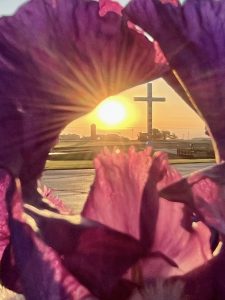
God Willing to be Humiliated

Palm Sunday kicks off the great paradox of Holy Week. Can you imagine God, the omniscient, omnipotent Creator of the universe, the source of all we are and all we have (you know – God!)  willing to be humiliated in front of you? But that’s what He did:

  • He rode into Jerusalem on a donkey instead of a stallion, the gallant horse of a king.
  • Crowds were cheering him on and singing “Hosanna in the highest.” But at the end of the week that same crowd would yell, “Crucify Him.”
  • The people wanted Him to be king and take His seat on the throne. Instead, he got a crown of thorns and was nailed to the cross. And then He wound up in a tomb.

But, Jesus knew who He was. We read in Philipians 2:6-8 that, “though he was in the form of God, he did not regard equality with God something to be grasped. Rather, he emptied himself, taking the form of a slave, coming in human likeness; and found human in appearance, he humbled himself, becoming obedient to death, even death on a cross. He was willing to be humiliated. He did this for you. He did this because He loves you. This is part of His legacy.

Stewardship, like Holy Week, is also a paradox. It is striving to be like Jesus, living counter-culturally, living courageously, giving sacrificially. It is regarding others as more important, looking out for their interests ahead of your own (3-4), It is humbly submitting to God’s will and being obedient to His word. That creates our legacy.

What will your legacy be? How can living stewardship help you go deeper in your relationship with Jesus. What would your life look like if you tried to live as He would wish: humble, other-centered, self-sacrificing, and generous?

Keeping Faith in Futile Situations

How do you keep faith in situations that seem futile? I mean, look at what’s going on in our world: wars in Iran and Ukraine, ICE now deployed to airports, a college kid shot just walking across campus with a friend. World peace and brotherly love seem improbable at best if not impossible.

But so did Lazarus being raised from the dead seem impossible to Martha. Still, Jesus told her, “Did I not tell you that if you believe you will see the glory of God?” Do you believe you will see the glory of God? What would that look like, what would the glory of God look like for you?

Even with today’s sometimes AI generated and often one-sided news reports, I believe we can see God’s glory all around us. I find it in the joy and laughter of three-year old leaping into her daddy’s arms, in the beauty of nature, in the high-school choir singing for the poor and hungry at the St. Joseph’s altar, and yes – I see God’s glory even in difficulties.

Bring your concerns to God in prayer and lay them at the foot of the cross. There, receive His grace, mercy, and forgiveness. Know and believe that God loves you and blesses you. Humbly acknowledge your gratefulness for all of your blessings. Praise God and give Him glory and honor. He is worthy of your praise.

So, how do we see the glory of God today? Like Jesus said to Martha – believe. Jesus told Thomas, “Do not be unbelieving, but believe.” (Jn 20:27). He tells us that, too. Trust Him. Love Him. And love your neighbor. St. Vincent de Paul said, “Charity is the cement which binds communities to God and persons to one another.”

                                                                                                                                                                      Photo Credit: Robert Davis

How Do You See?

Bing Crosby croons, “Do you see what I see?” I know it’s Lent, but that Christmas song popped into my head when I heard Sunday’s first reading. It’s a great story in 1 Samuel 16 about God telling Samuel to go to Jesse’s house to anoint the new king that God has chosen to succeed Saul. Samuel sees the oldest son and how tall and good looking he is and says, “Surely, the anointed is here.” But God tells him not to judge from appearances; that He (God) does not see as we see. He looks into the heart.

How do you see? How’s your eyesight? Do you find God in others? I like to watch people going up for communion. My wife scolds me that I shouldn’t be doing that, that I’m just eyeing them to see who’s there and complain about them wearing shorts and tennis shoes to Mass. I say I’m just looking for Jesus in them.

Do you notice God in the poor? In the beggar on the street? How about in the frumpy teen on the skateboard? Do you see Him in the 80-something-year old lady behind the steering wheel creeping into a right turn causing you and everyone behind you to slam on your breaks? Do you realize how much God loves you and how much He blesses you? Do you appreciate everything He’s given you? Do you believe God is able to provide all your needs?

When God looks into your heart, does He see your love for Him? Does He agree that you love your neighbor as yourself? When he watches your activities during the day, does He observe that He is first in your life, first with your time in prayer and Bible reading in the morning? Does He applaud your using your talents to serve others and build His kingdom? When He looks at your bank account, does He notice that He is first in your spending?

Maybe pull out that old Bing Crosby album and listen a-new. Hear the lyrics as if it is God asking you, “Do you see what I see?” and be humble and grateful that He sees us with eyes of love.

give me THIS water

We read in John 4:5-42 about Jesus meeting the Samaritan woman at the well. You know the story about how Jesus asks her for a drink, and in their back-and-forth, He teaches, “Everyone who drinks this water will be thirsty again; but whoever drinks the water I shall give will never thirst.” She replies, “Sir, give me this water so that I may not be thirsty or have to keep coming here to draw water (13-15).”

I get it. The Samaritan woman doesn’t want to have to schlep that heavy bucket anymore. She wants her physical thirst sated. So do I. But, when we base our happiness on what we can draw from the well of stuff, our sense of security and contentment on things such as housing, cars, entertainments, and increasing financial balances, they will never be enough.

The world lures us with its enticements of wealth, power, contentment, prestige, and pleasure. We’re told these are the things we need to be happy. But Jesus reminds us that material things never truly satisfy us. We find that even when we get what we want, we always want more. Ecclesiastes 5:9 tells us, “The covetous are never satisfied with money, nor lovers of wealth with their gain; this too is vanity.” Instead, we are to seek the Kingdom of God first above all things. When we seek the kingdom of God first, then we will have all else besides (Mt. 6:33).

Markets crash; cars get dents and scratches. More stuff usually just adds more stress in our lives. True joy and peace come only when we follow Jesus, drinking the water He provides by receiving Him in the Eucharist and being obedient to His word. By being humble, other-centered, and self-sacrificing. Trust that God loves you and wants the best for you. Trust that He knows your needs and will give you this water, His water. Put Him first in your life, including first in your spending, and gain all else besides. 

“Arm yourself with prayer rather than a sword; wear humility rather than fine clothes.”   St. Dominic

                                                                                                                                                               Photo Credit: Robert Davis

Live a Holy Life

Did you know we are called to live a holy life? In 2 Tim 1:9 we are told that, “He saved us and called us to a holy life.” How do we live a holy life?

We are given the template in the Lenten practices of prayer, fasting, and almsgiving. These are the building blocks, the brick and mortar we use to build a legacy of a holy life.

  • Pray first. First thing in the morning; first before everything—before that next appointment or that next call.
  • Fast from worry and gossip and doubt. Fast from the drive to achieve at all costs.
  • Give alms to help the poor, declaring your solidarity with them. Give first – the very first expense in your budget.

It may be scary to live this way every day, stopping to pray first – especially in public; giving alms – especially to the beggar on the street. It is certainly counter-cultural. St. Francis de Sales said, “Nothing makes us so prosperous in this world as to give alms.” It takes pluck and fortitude. But we are called to live this holy life if we are to be a disciple of Jesus Christ!

That is what stewardship is about, being a disciple. Stewardship is about living according to God’s design for us as the verse in Timothy goes on to say. It is about putting God first in our everyday lives throughout the day.

So take courage, be stouthearted, and wait for the Lord (Ps 27:14). Living a holy life is transforming. Pray for wisdom and all the gifts of the Holy Spirit to live this way, to live the holy life He calls us to.