The Great Paradox of Palm Sunday

Palm Sunday kicks off the great paradox of Holy Week. Can you imagine God, the omniscient, omnipotent Creator of the universe, the source of all we are and all we have  – you know, God! – humbling himself in front of you? But that’s what He did: 

  • He rode into Jerusalem on a donkey instead of a stallion, the gallant horse of a king.
  • Crowds were shouting acclimations of “Hosanna” when in just a few days that same crowd would cry out “Crucify Him.”
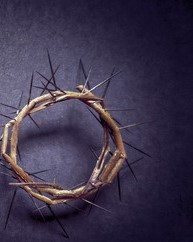
  • He could have called on legions of angels to fight for Him. Yet, He allowed soldiers to take him to court. He remained silent in front of Pilate. He endured spitting and lashes. He took on a crown of thorns, and carried His cross.
  • People thought He would take His seat on a throne. Instead, He wound up in a tomb.

Jesus knew who He was. But though he was in the form of God, did not regard equality with God something to be grasped. Rather, he emptied himself, taking the form of a slave, coming in human likeness; and found human in appearance, he humbled himself, becoming obedient to death, even death on a cross (Phil 2:6-8). He did this for you. He did this because He loves you.

Stewardship, like Holy Week, is also a paradox. It is striving to be like Jesus, living counter-culturally, living courageously, giving sacrificially. It is regarding others as more important, looking out for their interests ahead of your own (3-4),  It is humbly submitting to God’s will, and being obedient to His word.  

Stewardship is going deeper in our relationship with Jesus. What would your life look like if you ran to Him and tried to live as He would wish: humble, other-centered, self-sacrificing, and generous?

A Conversion Journey

Lent calls us to repentance and conversion. Living stewardship is a conversion journey toward a mature discipleship. We are to accept the loss of all things, as St. Paul told the Philippians in Chapter 3:8 – things like our ideas of success and happiness and the urge to buy more and more stuff considering it as so much rubbish. Instead, like Paul, we continue to pursue Jesus in hope of a deeper, more intimate relationship with Him. Lent gives us the perfect framework to pursue this gain. It is the  practice of the pillars of our faith: prayer, fasting, and almsgiving. 

Persevere in praying always and in everything. Lift a quick thought of praise and thanksgiving before every encounter, before every activity. Pray first in every situation. Fast by detaching from the desire to have more things and spending more on entertainment. Fast also from criticism and from thinking about how things ought to be. And how about this –  fast from negative thoughts about yourself! Remember whose you are and God’s mercy – like He showed the woman caught in adultery. How humbling. In gratitude for His mercy, give alms to help the poor. For me, supporting those ministries that are about the works of mercy – feeding the poor, helping them with clothing, housing and transportation, supporting ministries that help young women choose life are what I feel called to do, what brings me a deeper sense of meaning in my life. 

Giving reflects the intimacy of your relationship with God. It is a concrete demonstration of how mature your discipleship is and your trust in Him to provide. Give alms and be made clean (Luke 11:41). Give to pursue the goal, to attain the prize of God’s upward calling.

                                                                                                                                                                                           Photo Credit: Robert Davis

Which One are You?

It got me again, the parable of the Prodigal. I enjoy those retreat break-out sessions where we’re asked, “Which one are you?” I find it hard to comprehend, but still, very comforting to know the lavish love God gives me and all of us prodigals. But truly, I am more like the older brother.

The prodigal’s brother needed to change his way of thinking (Luke 15:27-32). I know I can get a little self-righteous myself, thinking, “Look at me. Look at all the good I do.” And like the Pharisee, “Thank you, Lord, that I’m not like that publican.” Hmm…I need a conversion from my self-righteous way of thinking like that big brother.

Living a stewardship life is a conversion journey. As a disciple of Jesus Christ, embracing stewardship changes our way of thinking about what we have, how we get it, and what we do with it. In essence, we become a new creation. As St. Paul tells us in 2 Cor 5:17-21, when we’re in Christ, our old stuff goes away and we become new. Living stewardship does that. Our old life passes away as we live a stewardship life.

As good stewards, we embrace the truth that everything we have is a gift to us from God. We receive God’s gift of love and we return His love by giving. When we actively love by giving to and serving others, we are the new thing that comes to them. We bring Jesus to them in our new, fresh, enthusiastic stewardship life, thus glorifying God and building His kingdom. How will you bring your new self to others, helping those most in need and thereby making a loving return to the Lord?

                                                                                                                                                                                                 Photo Credit: Robert Davis

What Makes you Feel Safe and Secure?

What makes you feel safe and secure? What do you need to have to feel like life is good, that you have no worries? I confess that for me it is having enough money to support my lifestyle. So I go out and strive to make money. I often justify that effort with the good intention of providing for my family. And when I achieve a measure of success and accumulate some wealth, I risk becoming haughty of heart, thinking I’ve made all this money because of my own efforts. Have you ever felt this way?  We forget, or worse, ignore the truth that God gives us everything, including the talent and ability, and the time, to work,  to achieve, and accumulate (Dt. 8:18).

St. Paul warns against thinking. He tells us in 1 Cor 10:12, “Therefore, whoever thinks he is standing secure should take care not to fall.” It is not our bank account that helps us to stand secure. Large and growing investment accounts do not give us the safety and security we need. God is our safety and security.

Of course – we know this. In overwhelming humility and gratitude, we should remember that all we have and all we are is because of God’s gifts to us. The appropriate response to God is to say along with the Psalmist, “Bless the Lord, oh my soul, and forget not all His benefits.” (Ps. 103:2) We should ask, “How can I repay the Lord for all the good done for me?” (Ps. 116:12)

How can we repay the Lord? By praising Him for all His benefits. Giving alms is praising God (Sir. 35:4). Giving sacrificially is your declaration that you stand secure in the love of God. Generosity is the best expression of your gratitude and trust in God to provide. Give to the Lord for all the good done for you. 

                                                                                                                                                                                                Photo Credit: Robert Davis

God’s Amazing Generosity

We read in Genesis 15:5-6,18 of God’s amazing generosity. He said this to Abraham, “Look up at the sky and count the stars, if you can. Just so, he added, will your descendants be. Abram put his faith in the LORD, who attributed it to him as an act of righteousness. On that day the LORD made a covenant with Abram, saying: To your descendants I give this land.”

What a great illustration of how God is a giver. He gives lavishly, extravagantly – as much as all the stars in the lsky. Think about it this way – can you count the leaves on the trees in your yard, or even all the blades of grass in your lawn? God gives all of that to you. Just as He gave Abram all that land and all those descendants, He gives us everything: every moment of time; every measure of talent; every ounce of treasure. Everything!

Abraham is an excellent role model for us. We should follow his example of trust. We should put our faith in God as Abraham did and have it accounted to us as righteousness. And as disciples, we should strive to emulate God and give lavishly as He gave to Abraham. We should give courageously, sacrificially – trusting that God will provide! When our giving is sacrificial, just at the edge of what we think we can afford, then in our small-scale way, our giving approaches the sacrificial giving of Jesus on the cross. 

This is the life-cycle of living Stewardship: From->Through->To. Everything comes from God which we receive gratefully and develop as best as we can. And then through us, we give to the needs of others–alms. Embracing the truth that God gives us everything, and believing in how God employed this truth in Jesus – Jesus coming from God, and through Jesus and what He did for us by suffering and dying on the cross – He gives to us eternal life. 

What, then, can we return to God for all the blessings and benefits He gives to us? Again, Abraham gives the best example. We know from the previous chapter, Genesis 14:20, that Abraham gave a tenth of everything. In utmost humility and gratitude, we, too, should give 10%. For most of us, that would be sacrificial. Tithing is hard to do. But can you step out in faith, trust in God as an act of righteousness, and give? 

Giving is the best demonstration of our gratitude. So give. Bring this to prayer and ask God what He wants you to give, what is sacrificial for you. Then give that amount. In Malachi 3:10 we hear God challenge us. It says to Try Him in this and see if in your obedience to God’s commands to give, just as Abraham was obedient, He doesn’t pour down blessings without measure.

                                                                                                                                                                                            Photo Credit: Robert Davis